I’ve worked on a lot of different projects focused on educating Torontonians and Canadians about Indigenous issues and building alliances between Indigenous and non-Indigenous peoples to support Indigenous resurgence, decolonization, and reconciliation. Here are some of them — see also my talks and presentations on my Public Speaking page.
I am currently working with Alan Corbiere and Jennifer Bonnell, historians at York University; Marcel Fortin of the University of Toronto map library; the Village at Black Creek (the new name for Black Creek Pioneer Village); Mississaugas of the Credit First Nation; Chippewas of Georgina Island First Nation; Mississaugas of Scugog First Nation; Chippewas of Rama First Nation; Six Nations of Grand River; and Jumblies Theatre on a multi-year research and museum installation project that will bring Indigenous history and perspectives to the Village at Black Creek through artful permanent installations. The research phase of the Changing the Narrative Project was funded by the Social Sciences and Humanities Research Council (SSHRC) and exhibition development is underway, with the permanent installation scheduled to open in 2026.
Ange Loft ( former Associate Artistic Director of Jumblies Theatre and now a Jumblies Theatre artistic associate), and I previously co-led a workshop for Village at Black Creek staff on Toronto’s Indigenous and treaty history. In August 2018, the Village hosted a weekend Talking Treaties installation that was viewed by approximately 800 visitors to the site.
In June, 2022, the Talking Treaties Collective — Ange Loft, filmmaker and York assistant professor and filmmaker Martha Stiegman, Anishinaabe scholar and theatre artist Jill Carter and I — launched A Treaty Guide for Torontonians, co-published by Toronto Biennial of Art and Jumblies Theatre + Arts, in partnership with Art Metropole. It quickly sold out and a second edition was published by Art Metropole in 2022.
Led by Martha Stiegman, we also created an accompanying website: Treaties for Torontonians. The website features much of the content of the book as well as a six-part seminar series called Polishing the Chain, sponsored by the Faculty of Environmental and Urban Change at York University, and links to many other resources about Toronto treaties.

With Ange Loft, I previously co-led numerous Talking Treaties workshops and presentations on Toronto’s treaty history for various groups, including Glendon College, York University Public History Symposium, Ontario Ministry of Indigenous Relations and Reconciliation, and the Mississaugas of New Credit First Nations History Gathering. Talking Treaties is an ongoing project of Jumblies Theatre & Arts.
From 2016 to December 2017, I was a member of the First Nations Round Table for the development of the Credit Valley Trail , a heritage trail that will eventually follow this historic waterway from its mouth at Port Credit to its source near Orangeville and introduce visitors to its cultural and environmental history.
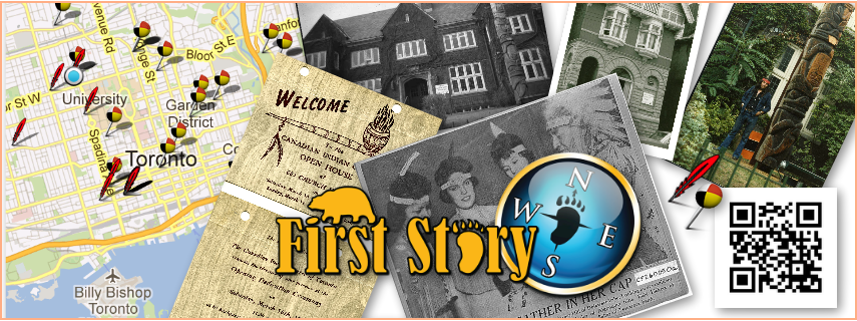 I was a member of First Story Toronto (formerly Toronto Native Community History Project), based at the Native Canadian Centre of Toronto, from 2009 to 2017. Was a historical consultant, co-developer, and contributor to First Story, a smart phone app created with the Centre for Community Mapping that interactively maps the Indigenous history of Toronto; prototype launched at ImagiNative Film Festival, October 17, 2012. To download, go to Driftscape and search First Story.
In June 2015, I was one of the coordinators of Talking Toronto Treaties, a collaboration between First Story Toronto, Jumblies Theatre, and George Brown College Aboriginal Student Services. On June 26, we hosted a major event at the Waterfront Campus of George Brown College. 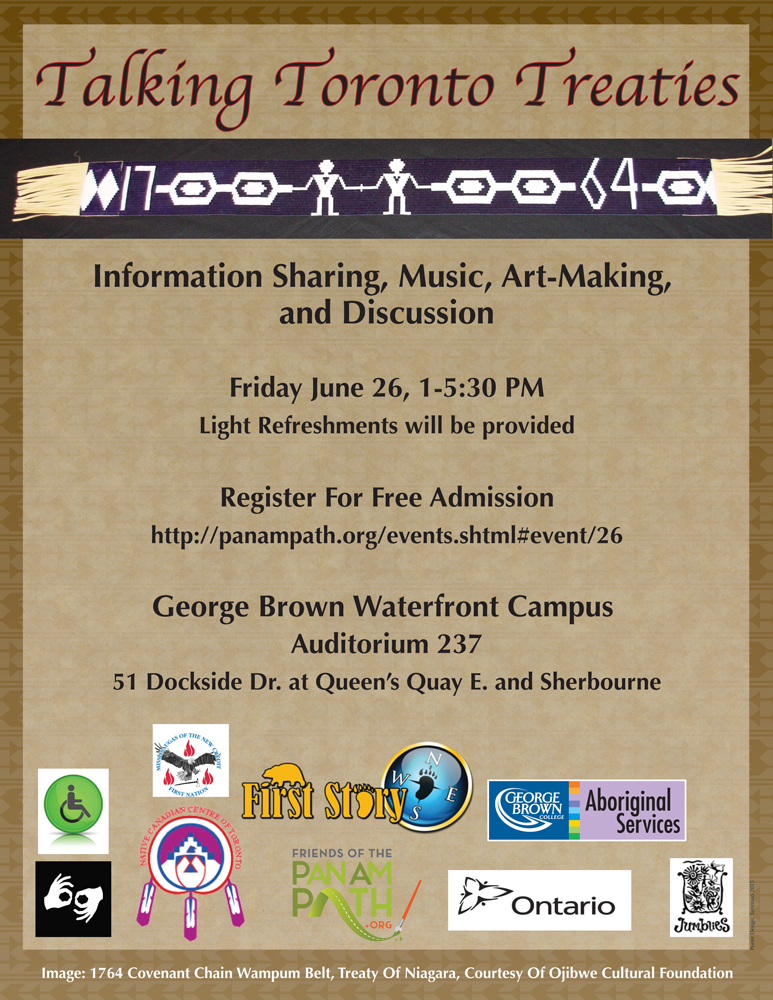
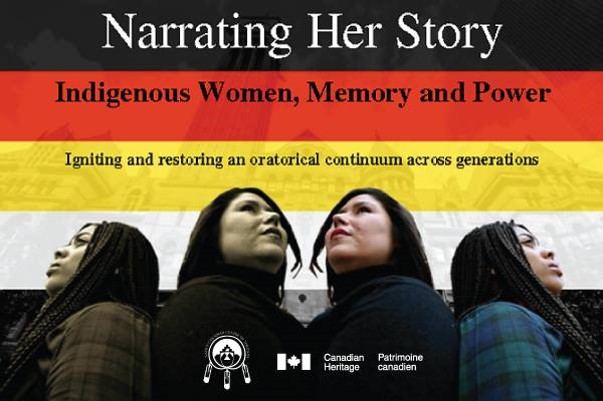
Another First Story Toronto project I was very involved with was Indigenous Women, Memory and Power in Toronto, 1960-1990,, which in 2013-14 brought young Indigenous women into sharing circles with elder community builders and activists from the Red Power days to “restore the oratorical continuum” and record this important Toronto history for posterity.
 The Meeting Place: Truth and Reconciliation Toronto 2012, was a wonderful community-based regional truth and reconciliation gathering organized by Toronto Council Fire Native Cultural Centre; Toronto Living into Right Relations Circle, United Church of Canada; Canadian Roots Exchange; and the Centre for Aboriginal Initiatives, University of Toronto, in May 2012.
As Coordinating Director of the University of Toronto Initiative on Indigenous Governance, I worked in partnership with the National Centre for First Nations Governance to organize the Reconciliation in Ontario Symposium at the Native Canadian Centre of Toronto, Feb. 8-10, 2010. It brought together First Nations leaders, youth, government and business leaders, academics and students to explore strategies furthering decolonization and alliance-building in Ontario.
 Founder and co-coordinator of Turning Point: Native Peoples and Newcomers On-Line, a volunteer-run web site facilitating dialogue and information sharing between Aboriginal and non-Aboriginal people in Canada, 2001-2009. Included discussion on history, land claims, indigenous governance, spirituality, cultural appropriation, environmental issues, social action, and education. See my article “Reconciliation in Cyberspace? Lessons from Turning Point: Native Peoples and Newcomers On-Line” in Lynne Davis, ed. Alliances: Re/Envisioning Relationships: Re/Envisioning Indigenous/Non-Indigenous Relationships (University of Toronto Press, 2010), 149-157.Turning Point: Native Peoples and Newcomers On-Line was a volunteer-run web site I founded in 2001 and coordinated with a group of Indigenous and non-Indigenous friends to facilitate dialogue and information sharing.
I was honoured to be a member of the steering committee for Beyond Survival: The Waking Dreamer Ends the Silence, an international gathering of Indigenous artists, writers, and performers, co-sponsored by the En’Owkin International School of Writing, the Native Arts Foundation, and the Museum of Civilization, held at the Museum of Civilization, Hull, Quebec, April 16-18, 1993.
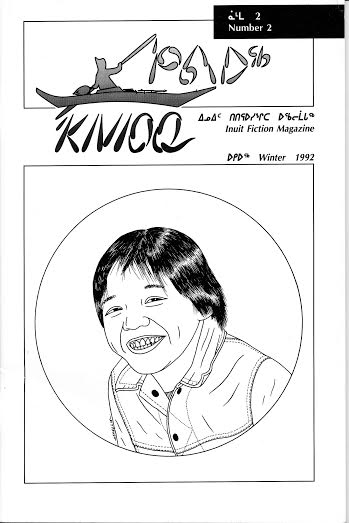 Cofounder (with David Young and Sandy MacAuley) and fundraiser, Baffin Island Writers’ Project, which promoted writing and publishing in Inuktitut or from an Inuit perspective, in partnership with the Baffin Divisional Board of Education and the Apple Canada Foundation. The project published Kivioq, an Inuit circumpolar literary magazine, brought writers (especially First Nations and Inuit writers) into Baffin Island schools and communities, edited by the late Alootook Ipellie, and supported local digital publishing from 1988-1991. See my article “The Baffin Writers’ Project,” Canadian Literature, A Quarterly of Criticism and Review, published by the University of British Columbia, 124-125 (Spring-Summer 1990), 266-272. Reprinted in W.H. New, ed., Native Writers and Canadian Writing (Vancouver: UBC Press, 1990).
 Victoria Freeman